

Brain Fog and Inflammation: The Science of a Cloudy Mind, and How a Targeted Nutrition Strategy Fits
Table of Contents
If a foggy, slowed-down feeling in your thinking has brought you here, including trouble concentrating and misplaced words, you are probably asking three questions at once: what is brain fog, what causes it, and what can I actually do about it?
Brain fog is not a disease. It is the name we give a group of cognitive symptoms, and it usually turns out to be a signal leading us to the source. A growing body of research, including work by Bevimi scientists on innate immunity and neuroinflammation, points to specific, adjustable factors. This page will explain what brain fog is, the mechanisms that produce it, how doctors evaluate it, and exactly how a targeted nutrition strategy can help.
The Short Version
- Brain fog is a symptom, not a disease, and it usually has an identifiable, often reversible cause.
- The most common causes are sleep debt, chronic stress, hormonal transition, post-viral effects, unresolved inflammation, nutrient gaps, thyroid issues, and dehydration.
- Inflammation is the thread running through many of them; in controlled human studies, immune activation on its own can impair memory.
- Best first moves: rule out medical causes with a clinician, protect deep sleep, hydrate, and address the inflammation sources you can impact.
- Where a formula like Bevimi Uno Protect can fit: supporting the response to inflammation and supplying brain nutrients, as a complement, not a treatment for any condition.
What Is Brain Fog, Really?
Think of brain fog the way you would think of a cough: a symptom, not a condition in itself. A cough can come from a cold, an allergy, or something more serious, and you would not treat them all the same way. Brain fog works the same way. When researchers at the University of Edinburgh reviewed how people actually describe it, the same handful of words kept popping up: forgetfulness, difficulty concentrating, mental slowness, a fuzziness or pressure in the head, and fatigue that is cognitive more than physical. The job is to find the source, because that is usually where the fix lives.
For most people, the fog is real, common, and at least partly reversible. It is not a permanent verdict on your brain, and the research of the last several years has steadily moved it from vague complaint to an identifiable and modifiable one.

What Actually Causes Brain Fog?
Brain fog rarely traces back to one thing, and the causes often overlap. Most of them are surprisingly ordinary, which is good news, because ordinary causes tend to be fixable ones.
Sleep debt
During deep sleep, the brain runs a fluid-driven clearance process that flushes out metabolic waste. Even a single night of deprivation measurably raises the waste proteins associated with cognitive decline. Short sleep does more than make you tired; it leaves the brain less able to keep up.
Chronic stress
Sustained exposure to stress hormones, mainly cortisol, acts on the hippocampus and prefrontal cortex, the regions that run memory and executive function. That is why a stressful season so often feels like a heavy cognitive load.
Hormonal transition
As estrogen fluctuates across the menopausal transition, verbal memory, attention, and processing speed can take a hit, opening a window of vulnerability for brain fog that, for many women, eases again after menopause.
Post-viral effects
In a study of more than 112,000 adults, people with lingering symptoms after COVID-19 showed small but measurable deficits in memory, reasoning, and executive function on objective testing. Fog after an infection is real and, for most people, it fades.
Systemic inflammation
When the immune system fires up, signaling molecules called cytokines act on the brain to produce a foggy, slow, low-motivation state, and inflammation that never fully resolves can keep the brain there.
Nutrient gaps
When brain fog persists, it could be a result of shortfalls in vitamin D, iron, and the omega-3 fatty acids that make up much of brain tissue. Low vitamin B12 and folate can produce cognitive symptoms that improve once corrected, which is why they sit in every standard reversible-causes screen.
Thyroid and other medical causes
An underactive thyroid is a well-recognized and often reversible cause of sluggish, foggy thinking. Depression, sleep apnea, and a number of common medications belong on the list, too.
Everyday factors
Even mild dehydration, a 1 to 2 percent drop in body water, worsens concentration and mood in healthy adults. Swings in blood sugar or a few drinks the night before can also cloud thinking.

What to Do About Brain Fog?
Sleep, stress, hydration, and blood sugar
These are behavior- and lifestyle factors. Protect deep sleep, ease the stress load, drink enough water, and steady your blood sugar.
Thyroid, B12, and other medical causes
These call for a clinician. Bloodwork and targeted treatment may resolve them.
Systemic inflammation and nutrient gaps
This is a factor where Bevimi Uno Protect directly supports the body’s response to inflammation through specialized pro-resolving mediators and omega-3s, supplying compounds such as omega-3, vitamin D, and magnesium. It is support, not treatment.
The Inflammation Connection: A Deeper Look at the Mechanism
After reading that list again, you may notice that one mechanism keeps reappearing: inflammation. The link between inflammation and fog is remarkably real and measurable, and one of the clearest demonstrations comes from a controlled human experiment. Healthy volunteers were given a very low dose of bacterial endotoxin, just enough to nudge the immune system without making them meaningfully ill. Their verbal and non-verbal memory measurably declined, and it did so independently of any physical sickness symptoms. Immune response and the resulting inflammation, on their own, can produce cognitive symptoms.
So how does an immune signal in the body reach the thinking brain? Through several routes at once. Circulating cytokines, or chemical messengers, send warning signals to the brain. Once these signals arrive, they activate the brain’s resident immune cells: the microglia. Activated microglia release inflammatory signals of their own. That is protective in the short term in an acute infection, but costly when it drags on over time. This is the biology behind what researchers call sickness behavior, a slowed, adaptive, low-drive cognitive state during infection. You may recognize that feeling from the worst day of a flu.
Downstream, that signaling reshapes brain chemistry in ways that match how brain fog actually feels. Inflammatory activation pulls the amino acid tryptophan away from serotonin production, slows the strength and number of signals to our neurons, and can loosen the blood-brain barrier. The picture is a brain that has not been damaged so much as told, chemically, to conserve and pull back. That distinction matters, because an instruction can be changed in a way that damage cannot.
Inflammation is not meant to run forever. It is supposed to end through an active, tightly regulated program called resolution, run by a family of molecules called specialized pro-resolving mediators, or SPMs, which the body builds from omega-3 fatty acids. Resolution is a distinct, positive process, one that clears debris and returns tissue to baseline, not simply the fading of inflammation. When it fails, low-grade neuroinflammation lingers. SPM levels have been found to run lower in neuroinflammatory conditions. Persistent brain fog may live in exactly that gap: an inflammatory response that switched on appropriately and then never fully switched off.
Sleep sits on top of all this. Deep sleep drives the glymphatic clearance of metabolic waste, a nightly flush of the brain. A single night without it raises brain amyloid-beta, and short sleep also pushes inflammatory tone up, so poor sleep and unresolved inflammation feed each other. It is one reason brain fog, especially in stressful times, rarely has a single, tidy cause.

How Is Brain Fog Evaluated? When to Get Checked
Brain fog is a clinical description but not a number on a lab report, so evaluation is really about finding the treatable cause underneath it. A thoughtful workup usually looks at a few categories:
Bloodwork
A clinician may check thyroid function, vitamin B12 and folate, vitamin D, iron studies, blood glucose or HbA1c, and inflammatory markers such as high-sensitivity CRP, since several of those point to reversible causes.
History and lifestyle review
Sleep, stress load, medications, alcohol, hormonal stage, and recent infections often reveal the factors you can modify more than any single test.
Red flags that warrant prompt care
Fog that comes on suddenly, is severe or steadily worsening, or arrives with weakness or numbness on one side, trouble speaking, vision changes, a severe or unusual headache, fever with confusion, or any loss of consciousness is not simply “fog.” Those symptoms need urgent evaluation.
How Bevimi Uno Protect Is Designed to Engage the Biology of Brain Fog
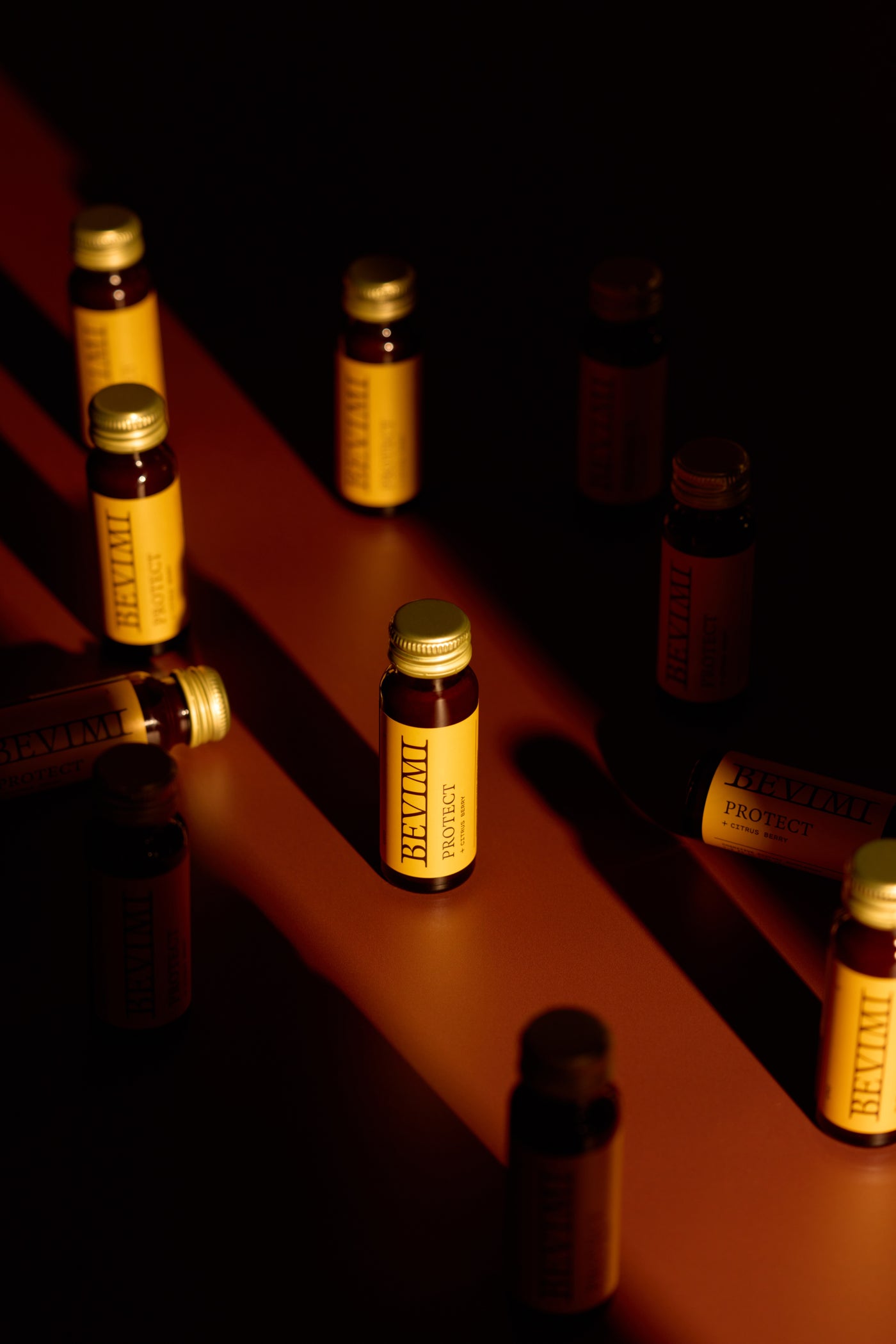
Bevimi Uno Protect delivers DHA and EPA in phospholipid form alongside nine other clinically studied ingredients in a single daily 1.7 oz shot. Here’s how it can help:
Supports the resolution of inflammation.
Chronic, unresolved neuroinflammation is a central driver of fog, and resolution is built on omega-3-derived mediators, so Bevimi supplies preformed specialized pro-resolving mediators from herring roe alongside the DHA and EPA the body uses to make more. The goal is to support resolution, not just to blunt inflammation.
Delivers brain-ready omega-3s in phospholipid form.
DHA is the omega-3 most concentrated in brain tissue, woven into the membranes and synapses that carry your thinking. Bevimi’s DHA and EPA are in phospholipid form, from herring roe, instead of the triglyceride form found in most fish oil. Phospholipid-bound omega-3s behave differently in digestion and blood incorporation. Omega-3s both support the structure of the brain and act as the raw material for the pro-resolving mediators above.
Modulates microglia with polyphenols.
Activated microglia, the immune cells of the brain and spinal cord, are a turning point in the inflammation-to-brain fog pathway, and several plant polyphenols in the formula, including curcumin, green-tea EGCG, quercetin, and mangiferin, act on the inflammatory signaling circuitry that microglia run. The strongest human signal comes from curcumin: in an 18-month randomized, placebo-controlled trial in non-demented adults, a bioavailable curcumin improved memory and attention versus placebo.
Supports cellular energy and NAD+.
Mental fatigue, the running-on-empty quality of brain fog, has an energy component. NAD+, the coenzyme at the center of cellular energy production, falls with age, a decline linked to cognitive aging, and it is consumed by the enzyme CD38, which rises with inflammation. Several ingredients target this energy production system: quercetin can inhibit CD38 to spare NAD+, and rare ginsenosides and mangiferin in the formula support mitochondrial function. The idea is to defend the energy supply the brain draws on.
Reinforces innate immune protection through the vitamin D pathway.
Bevimi’s research program centers on LL-37, a human antimicrobial peptide produced through the vitamin D-cathelicidin axis that also helps regulate inflammation. In laboratory work, LL-37 bound amyloid beta and blocked its assembly into fibrils. The formula supplies vitamin D3 with its required cofactor magnesium so the axis has the ingredients it needs to perform.
Brain fog frequently reflects a mix of unresolved inflammation, energy strain, and nutrient gaps, and the Bevimi formula is positioned to address resolution, energy, and brain-relevant nutrients all at once.
Bevimi’s Clinical Trial: The Brain-Health Biomarkers We’re Measuring
Bevimi is not only formulating around this science; it is generating data on it. In 2026, the company launched one of the larger double-blind, placebo-controlled trials in the nutrition category focused on cognitive health, a 12-week, multicenter study enrolling 100 to 150 participants ages 40 to 70.
Alongside safety and tolerability, which is the primary objective, the trial’s exploratory biomarker panel is built to interrogate the pathways described above:
- Inflammatory and oxidative stress markers, the most direct readout of the neuroinflammation-and-resolution mechanism at the center of the fog story
- LL-37 activity, the innate-immune component at the heart of Bevimi’s research
- pTau217 and the Aβ42/Aβ40 ratio, blood biomarkers relevant to longer-term brain health
- NfL (neurofilament light chain), a marker of neurodegeneration
Practical Actions for Anyone Fighting Brain Fog
If brain fog is clouding your days, here’s a great place to start:

- Rule out the medical causes first. Before you write the fog off as stress, ask a clinician about thyroid function, vitamin B12 and folate, vitamin D, iron, blood sugar, sleep disorders, and medication effects.
- Protect deep sleep. It is when the brain clears itself and when inflammatory tone settles. Consistent timing, a cool dark room, less alcohol, and no late-day caffeine will do more for fog than most supplements.
- Hydrate and move. Even mild dehydration measurably blunts focus and mood, and regular activity lowers inflammatory tone and supports cognition.
- Work on the inflammation factors you can impact. Sleep, stress, diet quality, and recovery from illness all shape inflammatory signaling.
- Match nutrient forms to how you metabolize them. Phospholipid-bound omega-3s are a reasonable formula choice, and omega-3s are both structural and the raw material for inflammation resolution.
- Re-check when needed. Fog that lasts for weeks, disrupts your work or safety, or shows up alongside other symptoms deserves a proper, repeatable evaluation, not a guess.
FAQs: Brain Fog, Inflammation, and Mental Clarity
What is brain fog?
An everyday term for a cluster of cognitive symptoms — forgetfulness, difficulty concentrating, mental slowness, fuzziness, and cognitive fatigue — rather than a single medical diagnosis.
Can inflammation really cause brain fog?
There is direct human evidence: a low dose of endotoxin that activates the immune system impaired memory in healthy volunteers, independent of physical sickness. Cytokines signal the brain, activate microglia, and shift neurotransmitter metabolism toward a foggy state.
What are specialized pro-resolving mediators (SPMs)?
Molecules the body makes from omega-3 fatty acids to actively end inflammation, a process called resolution. When resolution fails, low-grade neuroinflammation can persist.
Is brain fog reversible?
Often, yes. Many causes, from sleep debt to low B12 or a thyroid issue, improve once the underlying causes are corrected. Persistent fog should be evaluated to find treatable causes.
When should I worry about brain fog?
Get prompt care if it is sudden, severe, or worsening, or comes with weakness, speech or vision changes, a severe headache, fever, or confusion. Fog that drags on for weeks also warrants a workup.
How could Bevimi’s ingredients relate to brain fog?
Providing the ingredients to support the body’s resolution of inflammation (SPMs and omega-3), modulating microglial signaling (polyphenols such as curcumin), defending cellular energy (NAD+ support), and reinforcing innate-immune regulation (the vitamin D-LL-37 axis). The clinical trial is further examining relevant biomarkers.
Where Bevimi Fits
Bevimi Uno Protect was built to support the inflammation-and-nutrition systems that sit underneath so much brain fog, delivering DHA and EPA in phospholipid form alongside nine other clinically studied ingredients in a single daily 1.7 oz shot. It is made for people who want a nutrition strategy shaped by the biology instead of a generic multivitamin, and it works as a complement to sleep, hydration, and medical care, not a replacement for any of them.
See the full ingredient panel and clinical dosages
These statements have not been evaluated by the Food and Drug Administration. This product is not intended to diagnose, treat, cure, or prevent any disease. Persistent or concerning cognitive symptoms should be discussed with a qualified healthcare provider.
Sources & References
- McWhirter L, Smyth H, Hoeritzauer I, et al. What is brain fog? Journal of Neurology, Neurosurgery & Psychiatry. 2023;94(4):321-325. doi:10.1136/jnnp-2022-329683.
- Hampshire A, Azor A, Atchison C, et al. Cognition and memory after Covid-19 in a large community sample. New England Journal of Medicine. 2024;390:806-818. doi:10.1056/NEJMc2403996.
- Dantzer R, O’Connor JC, Freund GG, Johnson RW, Kelley KW. From inflammation to sickness and depression: when the immune system subjugates the brain. Nature Reviews Neuroscience. 2008;9:46-56. doi:10.1038/nrn2297.
- Lupien SJ, McEwen BS, Gunnar MR, Heim C. Effects of stress throughout the lifespan on the brain, behaviour and cognition. Nature Reviews Neuroscience. 2009;10:434-445. doi:10.1038/nrn2639.
- Maki PM, Weber MT. Scientific insights into brain fog during the menopausal transition. Climacteric. 2021;24(6):555-558. doi:10.1080/13697137.2021.1942700.
- Xie L, Kang H, Xu Q, et al. Sleep drives metabolite clearance from the adult brain. Science. 2013;342(6156):373-377. doi:10.1126/science.1241224.
- Shokri-Kojori E, Wang GJ, Wiers CE, et al. β-Amyloid accumulation in the human brain after one night of sleep deprivation. PNAS. 2018;115(17):4483-4488. doi:10.1073/pnas.1721694115.
- Smith AD, Refsum H. Homocysteine, B vitamins, and cognitive impairment. Annual Review of Nutrition. 2016;36:211-239. doi:10.1146/annurev-nutr-071715-050947.
- Ganio MS, Armstrong LE, Casa DJ, et al. Mild dehydration impairs cognitive performance and mood of men. British Journal of Nutrition. 2011;106(10):1535-1543. doi:10.1017/S0007114511002005.
- Samuels MH, Bernstein LJ. Brain fog in hypothyroidism: what is it, how is it measured, and what can be done about it. Thyroid. 2022;32(7):752-763. doi:10.1089/thy.2022.0139.
- De Lorenzi E, Chiari M, Colombo R, et al. Evidence that the human innate immune peptide LL-37 may be a binding partner of amyloid-β and inhibitor of fibril assembly. Journal of Alzheimer’s Disease. 2017;59(4):1213-1226. doi:10.3233/JAD-170223.
- Chung C, Silwal P, Kim I, Modlin RL, Jo EK. Vitamin D–cathelicidin axis: at the crossroads between protective immunity and pathological inflammation during infection. Immune Network. 2020;20(2):e12. doi:10.4110/in.2020.20.e12.
- Tokajuk J, Deptuła P, Piktel E, et al. Cathelicidin LL-37 in health and diseases of the oral cavity. Biomedicines. 2022;10(5):1086. doi:10.3390/biomedicines10051086.
- Valente M, Dentoni M, Bellizzi F, Kuris F, Gigli GL. Specialized pro-resolving mediators in neuroinflammation. Molecules. 2022;27(15):4836. doi:10.3390/molecules27154836.
- Reichenberg A, Yirmiya R, Schuld A, et al. Cytokine-associated emotional and cognitive disturbances in humans. Archives of General Psychiatry. 2001;58(5):445-452. doi:10.1001/archpsyc.58.5.445.
- Serhan CN. Pro-resolving lipid mediators are leads for resolution physiology. Nature. 2014;510(7503):92-101. doi:10.1038/nature13479.
- Small GW, Siddarth P, Li Z, et al. Memory and brain amyloid and tau effects of a bioavailable form of curcumin in non-demented adults: a double-blind, placebo-controlled 18-month trial. American Journal of Geriatric Psychiatry. 2018;26(3):266-277. doi:10.1016/j.jagp.2017.10.010.
- Covarrubias AJ, Perrone R, Grozio A, Verdin E. NAD+ metabolism and its roles in cellular processes during ageing. Nature Reviews Molecular Cell Biology. 2021;22:119-141. doi:10.1038/s41580-020-00313-x.