

APOE4 and Amyloid: What Carrying the Gene Actually Means for Your Brain
Table of Contents
If a genetic test or a family history has brought APOE4 to your attention, you might now be asking yourself: what is APOE4, what does this mean for my brain, and what can I do about it?
APOE4 is a common variant of the APOE gene that makes your brain less efficient. The APOE4 gene is the strongest common genetic risk factor for Alzheimer’s disease. But APOE4 is a risk factor, not a diagnosis, and a growing body of research, including research by Bevimi scientists, points to specific, modifiable levers that carriers can pull.
What is Amyloid Beta? The Mechanism Behind the Headlines
Amyloid beta (Aβ) is a small protein fragment produced when a larger protein — amyloid precursor protein (APP) — gets cut apart by enzymes in the brain. In a healthy system, amyloid beta is produced, does its job, and gets cleared away.
The trouble starts when clearance slows down or production accelerates. Amyloid beta fragments begin to clump together. First they group into small, mobile clusters called oligomers — increasingly viewed as the more neurotoxic culprits, since they interfere directly with communication between neurons — and eventually into the larger, sticky plaques that show up on brain scans and in autopsy studies. This buildup, often called amyloid burden, is one of the defining pathological features of Alzheimer’s disease.
For APOE4 carriers, this makes a difference: APOE4 protein is less efficient than other APOE variants at helping the brain transport and clear amyloid beta, which is a core reason amyloid tends to accumulate earlier and more heavily in APOE4 carriers than in non-carriers.
The Amyloid Cascade Hypothesis: Where the Science Stands Today
For nearly three decades, the “amyloid cascade hypothesis” has anchored Alzheimer’s research: the idea that amyloid accumulation is the initiating event that sets off a downstream chain reaction of tau tangles, neuroinflammation, synaptic loss, and eventually the memory and cognitive symptoms associated with the disease.
Where does that hypothesis stand today? Amyloid is still a key element of every case of Alzheimer’s — the science on that point is well established, and it underpins the FDA-approved anti-amyloid drug class. But the field has moved past a simple “more plaque equals more disease” model. Researchers now widely recognize that:
- Amyloid alone doesn’t fully explain symptom severity or timing. Some people accumulate significant plaque without developing dementia, while tau pathology tracks more closely with cognitive decline.
- Amyloid is not the whole story. Neuroinflammation, vascular health, metabolic dysfunction, and the gut–brain axis all interact with amyloid biology along the way.
- The window for intervention is long before symptoms appear. Biomarker changes, including amyloid accumulation, can emerge up to 30 years before a clinical diagnosis, which is exactly why proactive, pre-symptomatic strategies are drawing so much attention, especially for genetically at-risk individuals.
In short: amyloid still matters immensely, but the 2026 science treats it as the opening chapter of a longer pathological story, not the whole book.
How is Amyloid Measured? PET, CSF, and Blood-Based Assays
Amyloid burden can be assessed a few different ways, each with real tradeoffs:
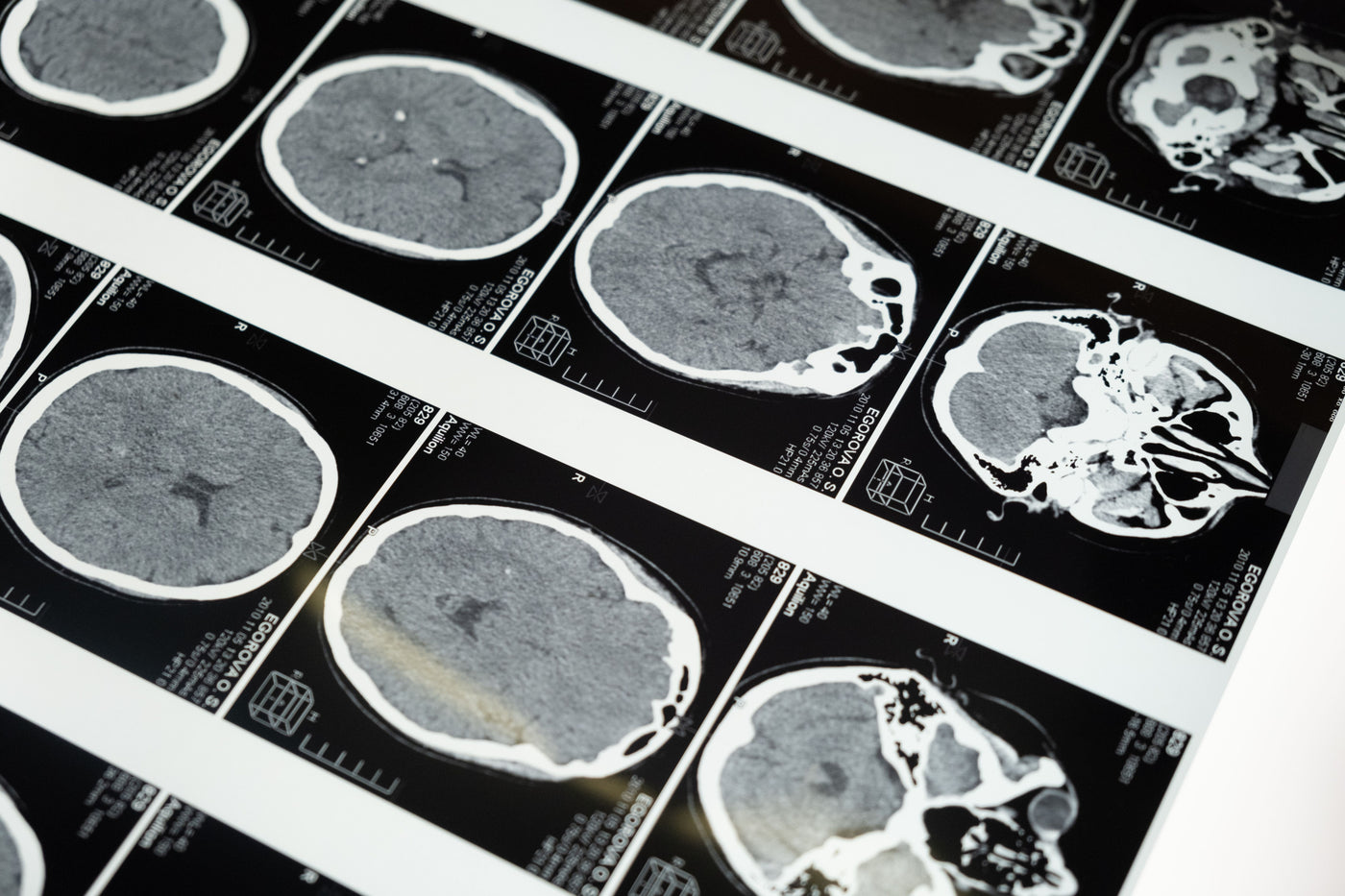
PET imaging (amyloid PET scans): The historical gold standard. A radioactive tracer binds to amyloid plaques in the brain, which are then visualized on a scan. Highly accurate, but expensive, not always covered by insurance, and not practical for routine, repeated monitoring.
Cerebrospinal fluid (CSF) testing: Requires a lumbar puncture to directly measure amyloid and tau proteins in spinal fluid. Very informative, but invasive enough that it’s typically reserved for clinical or research settings rather than everyday screening.
Blood-based biomarker assays: The fastest-growing category, and the one reshaping accessibility. Modern assays can measure amyloid-related markers (like the Aβ42/Aβ40 ratio) as well as tau fragments directly from a blood draw. This is a major reason brain health testing — including panels that pair biomarker results with APOE4 genetic status — has moved from research labs into consumer and primary-care settings.
Anti-Amyloid Drugs vs. Prevention: Where Supplements Fit
The last few years have brought the first FDA-approved anti-amyloid antibody therapies, which work by clearing existing plaque in people already diagnosed with early Alzheimer’s disease. They represent a real scientific milestone, and they also illustrate the limits of a late-stage, plaque-clearing-only approach: treatment typically begins only after significant pathology and often measurable cognitive symptoms are already present, requires ongoing infusions and monitoring, and modest clinical benefit comes with a real safety burden.
That leaves a wide-open window before diagnosis: the 20 to 30 years when amyloid may already be accumulating quietly, but no drug is indicated, and no prescription exists. This is precisely where nutrition and lifestyle strategy — not as a replacement for medicine, but as a proactive complement to it — has the most room to matter, particularly for people who already know they carry elevated genetic risk.
This is also where a targeted supplement strategy is meaningfully different from a generic one. It’s not about taking “something for the brain.” It’s about supporting the specific mechanisms known to be under strain in APOE4 carriers, starting with the way this population processes and transports fat-soluble brain nutrients like DHA.
Why APOE4 Carriers Process DHA Differently
APOE4’s job is fat and lipid transport, and DHA, the omega-3 fatty acid most concentrated in brain tissue, is exactly the kind of fat-soluble nutrient it’s supposed to move efficiently into the brain. Research suggests APOE4 carriers metabolize and transport standard dietary DHA less efficiently than non-carriers, meaning the same fish oil capsule may simply not reach the brain the same way in an APOE4 carrier as it would in someone without the variant.
This is a big part of why form matters as much as dose. Bevimi Uno Protect delivers its DHA and EPA in phospholipid form, sourced from herring roe, rather than the standard triglyceride form found in most fish oil supplements. Because phospholipid-bound omega-3s use a different, more efficient transport pathway into brain tissue, this approach is designed to help bypass the transport bottleneck that APOE4 carriers — the population with the most to gain from efficient DHA delivery — commonly face.
Amyloid + Tau: Why pTau217 is Becoming the Better Signal
Amyloid gets the headlines, but many researchers and clinicians now consider tau — specifically a biomarker called pTau217 — the more clinically informative signal, for a few reasons:
- pTau217 rises more closely in step with actual neurodegeneration and symptom progression than amyloid measures do.
- It’s detectable in blood with high accuracy, which has made it the centerpiece of the new wave of accessible, at-home and clinic-based Alzheimer’s biomarker panels.
- It helps answer the follow-up question amyloid alone can’t: not just “is pathology present,” but “is it actively progressing.”
For APOE4 carriers weighing how seriously to take their risk, pTau217 — often paired with the Aβ42/Aβ40 ratio and markers like GFAP and NfL — is increasingly the more actionable data point, and it’s a major reason at-home biomarker testing has expanded so quickly.
Bevimi’s Clinical Trial: The Amyloid-Adjacent Biomarkers We’re Measuring
Bevimi isn’t just formulating around amyloid science; we’re generating data on it. In 2026, Bevimi launched one of the largest double-blind, placebo-controlled clinical trials in the nutrition category focused on cognitive decline: a 12-week, multicenter trial enrolling 100–150 participants ages 40–70.
Alongside safety and tolerability — the trial’s primary objective — the study’s exploratory biomarker panel includes measures directly relevant to amyloid pathology and its downstream effects, including:
- pTau217 and the Aβ42/Aβ40 ratio, key amyloid- and tau-related blood biomarkers
- NfL (neurofilament light chain), a marker of neurodegeneration
- Inflammatory and oxidative stress markers, which interact with amyloid biology
- LL-37 activity, a component of the innate immune system that is central to Bevimi’s research program
That last one deserves its own explanation. In laboratory research conducted at Stanford University, Bevimi’s internal research program has found that LL-37 binds to amyloid beta and, in both in vitro and in vivo models, helps prevent amyloid formation — directly engaging one of the core mechanisms behind Alzheimer’s pathology. These are early-stage, preclinical findings, and Bevimi’s ongoing clinical trial is designed to build on that foundation with human biomarker data. We believe this kind of transparent, biomarker-anchored research — not broad claims without a mechanism — is what real progress in cognitive longevity should look like.

Practical Actions for Amyloid-Aware, APOE4-Positive Readers
If you know, or suspect, you carry the APOE4 gene, here are some practical actions you can take today:

- Get informed on your numbers, not just your genotype. APOE4 status is one input. Pairing it with a modern blood-based biomarker panel (pTau217, Aβ42/Aβ40, GFAP, NfL) gives a far more complete, dynamic picture than genetics alone.
- Prioritize an APOE4-informed diet. Research has associated regular, moderate seafood consumption with fewer Alzheimer’s-related brain changes, specifically among APOE4 carriers — a notable finding given this population’s altered fat metabolism.1 An APOE4 diet emphasizing marine omega-3s, polyphenol-rich produce, and reduced processed fat is consistently associated with better outcomes in this population.
- Build an APOE4 lifestyle around known modifiable risk factors. A substantial and growing body of evidence links physical activity, sleep quality, cardiovascular health, cognitive engagement, and social connection with reduced dementia risk broadly — habits that matter for everyone, but carry extra weight for genetically at-risk individuals.2
- Choose nutrient forms designed for how you actually metabolize them. If your APOE4 status affects how efficiently you transport DHA, a phospholipid-bound omega-3 source is a more targeted choice than a standard fish oil capsule.
- Re-test periodically, not just once. Because amyloid and tau biomarkers are dynamic, tracking them over time — rather than treating one test as a permanent verdict — is where real, personalized insight comes from.
FAQs: APOE4, Amyloid, and Brain Health
Does having APOE4 mean I will get Alzheimer's?
No. APOE4 is a risk factor, not a diagnosis. It raises probability — substantially more with two copies than one — but many APOE4 carriers never develop Alzheimer’s, and lifestyle and biomarker-informed strategies can meaningfully shift the picture.
What's the difference between amyloid plaques and amyloid oligomers?
Oligomers are small, soluble clusters of amyloid beta protein that form first and are increasingly linked to direct neuronal damage. Plaques are the larger, insoluble deposits that oligomers eventually aggregate into, and are what’s typically visible on a PET scan.
Is amyloid still considered the cause of Alzheimer's in 2026?
Amyloid accumulation is still considered a key early driver in most Alzheimer’s cases, but current science views it as the start of a broader cascade — involving tau, inflammation, and vascular and metabolic factors — rather than the sole cause of symptoms.
Why is pTau217 considered a better biomarker than amyloid alone?
pTau217 correlates more closely with active neurodegeneration and symptom progression, and it’s measurable in blood with high accuracy — making it a strong complement to amyloid biomarkers for tracking disease activity over time.
Can diet actually affect amyloid burden in APOE4 carriers?
Research has linked regular seafood consumption to fewer Alzheimer’s-related brain changes specifically in APOE4 carriers, and APOE4’s role in fat transport makes nutrient form — like phospholipid-bound DHA — particularly relevant for this population.
What does Bevimi measure in its clinical trial that relates to amyloid?
Bevimi’s ongoing clinical trial tracks an exploratory biomarker panel that includes pTau217, the Aβ42/Aβ40 ratio, NfL, inflammatory markers, and LL-37 activity — all relevant to amyloid pathology and the broader Alzheimer’s disease process.
Where Bevimi Fits
Bevimi Uno Protect was formulated with APOE4 carriers’ altered fat metabolism specifically in mind — delivering DHA and EPA in phospholipid form, alongside nine other clinically studied ingredients, in a single daily 1.7 oz shot. It’s built for people who want a nutrition strategy that’s actually informed by their biology, not a generic multivitamin approach to brain health.
See the full ingredient panel and clinical dosages
These statements have not been evaluated by the Food and Drug Administration. This product is not intended to diagnose, treat, cure, or prevent any disease. Genetic and biomarker testing referenced on this page should be discussed with a qualified healthcare provider.
Sources & References
- Morris MC, Brockman J, Schneider JA, et al. Association of seafood consumption, brain mercury level, and APOE ε4 status with brain neuropathology in older adults. JAMA. 2016;315(5):489–497.
- Livingston G, Huntley J, Sommerlad A, et al. Dementia prevention, intervention, and care: 2020 report of the Lancet Commission. Lancet. 2020;396(10248):413–446.
- Chung C, et al. Vitamin D–Cathelicidin Axis: at the Crossroads between Protective Immunity and Pathological Inflammation during Infection. Immune Network. 2020;20(2):e12.
- De Lorenzi E, et al. Evidence that the Human Innate Immune Peptide LL-37 may be a Binding Partner of Amyloid-β and Inhibitor of Fibril Assembly. Journal of Alzheimer’s Disease. 2017;59(4):1213–1226. doi:10.3233/JAD-170223.
- Tokajuk G, et al. Cathelicidin LL-37 in Health and Diseases of the Oral Cavity. Biomedicines. 2022;10(5):1086. doi:10.3390/biomedicines10051086.