

Amyloid Beta and Alzheimer’s: What the Latest Research Shows
Table of Contents
Your brain made amyloid beta today. It’s making some right now, as you read this, and tonight, while you sleep, it’ll clear away much of what it made. The turnover is fast. Studies in healthy adults find that roughly 8% of the amyloid in spinal fluid is produced and cleared every hour, which works out to replacing most of the supply over the course of a single day.
Amyloid isn’t a foreign invader, and finding it in your brain isn’t a verdict. The questions worth asking are harder. Why does it sometimes build up faster than the brain can clear it? What does that build-up actually do? And can you reasonably do anything about it?
The Short Version
- Amyloid beta is a normal protein fragment. Your brain makes it and clears it every day. Trouble starts only when it clumps into oligomers and plaques faster than it’s removed.
- Amyloid is a hallmark of Alzheimer’s. It isn’t the disease itself. About 10% of cognitively healthy 50-year-olds have measurable amyloid, and 44% of cognitively healthy 90-year-olds do, too.
- The amyloid cascade hypothesis still shapes the field, but it’s still debated. Drugs designed to clear amyloid and slow early Alzheimer’s had modest results. Amyloid matters, but most researchers now treat it as one part of a bigger process that also involves tau, inflammation, blood vessels, and immune defense.
- An emerging line of research, including work by Bevimi’s scientists, suggests amyloid may start as part of the brain’s immune defense and turn into a problem when that defense doesn’t switch off.
- You can measure amyloid with a PET scan, a spinal fluid test, or, increasingly, a blood test. A positive result is a biomarker finding. It’s not a diagnosis.
1. What Is Amyloid Beta?
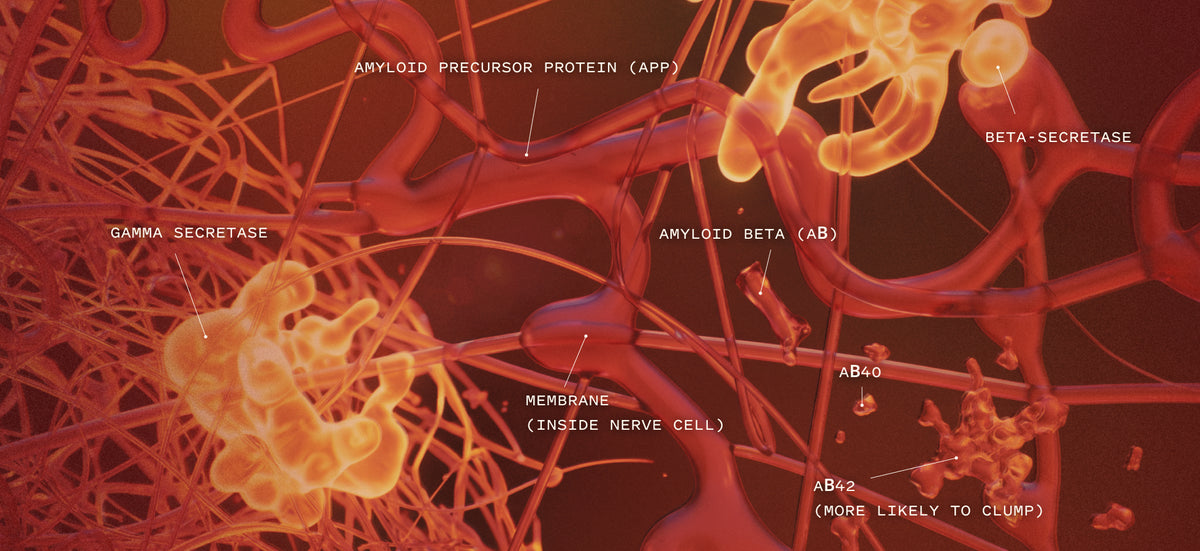
Amyloid beta (Aβ) is a small protein fragment, usually 38 to 43 amino acids long, cut from a larger protein called amyloid precursor protein (APP) that sits in nerve cell membranes. Healthy brains make it throughout life, as do brains with Alzheimer’s.
How Is Amyloid Beta Produced in the Brain?
Two enzymes cut APP, one after the other. Beta-secretase (BACE1) makes the first cut. Gamma-secretase then makes a second cut within the membrane and releases amyloid beta. Where that second cut lands sets the fragment’s length. Aβ40 is the most common form. Aβ42 is two amino acids longer, stickier, and more likely to seed plaques, which is why the Aβ42/Aβ40 ratio shows up on so many test reports.
Nerve activity pushes release up. That’s one reason levels climb while you’re awake and fall while you sleep. In one study, a single night without sleep raised spinal-fluid amyloid by roughly 25% to 30%, and the extra came from increased production.
Amyloid Proteins, Oligomers and Plaques: What’s the Difference?
Amyloid shows up in three forms, and the differences matter.
- Monomers are single amyloid beta molecules dissolved in brain fluid. This is the everyday form, and the brain normally clears it.
- Oligomers are small, soluble clusters of a few molecules up to a few dozen. In lab and animal studies, they’re the form that does the most harm to synapses (the junctions where nerve cells pass signals). Oligomers pulled from human Alzheimer’s brains damaged synapses and memory in rats.
- Plaques are large, insoluble deposits of amyloid fibrils sitting between neurons. Pathologists see them under a microscope, and amyloid PET scans can detect them. In that same animal research, intact plaque cores did little harm unless they were broken apart, leading some researchers to think of plaques partly as a holding tank: less active than oligomers, but a sign the system has been overwhelmed for a long time.
Keep this distinction in mind for later: A PET scan sees plaques. It can’t see oligomers.
Why Can Amyloid Accumulate?
It’s a balance problem. In the common late-onset form of Alzheimer’s, the brain doesn’t seem to make much more amyloid, but it clears it more slowly. One tracer study found clearance was about 30% slower in people with Alzheimer’s than in controls, while production was about the same. Think of a sink with the tap running at a normal rate and a partly blocked drain.
The brain has several ways of getting rid of amyloid. Microglia, its resident immune cells, swallow it. Enzymes chop it up. Transport proteins carry it across the blood-brain barrier into the bloodstream. And in mice, a fluid-flushing network called the glymphatic system sweeps waste out along blood vessels, mostly during deep sleep. Age, APOE4, poor sleep, damaged blood vessels, and chronic inflammation can each slow one or more of these exits.
Does Amyloid Always Mean Alzheimer’s or Cognitive Decline?
No. Plenty of people with amyloid never develop dementia. A meta-analysis of 55 studies found amyloid in about 10% of cognitively normal people at 50 and 44% at 90, with rates two to three times higher in APOE4 carriers. One modeling study put the lifetime risk of Alzheimer’s dementia at roughly 29% for a cognitively normal 65-year-old woman who has amyloid and no other biomarker changes. That’s a real number. Turned around, the same model suggests roughly 7 in 10 women in that position won’t develop Alzheimer’s dementia.
Amyloid also shows up in other conditions, including cerebral amyloid angiopathy, where it collects in blood vessel walls. Having it raises your risk, but on its own, it doesn’t tell anyone what their future holds.
2. What Is the Amyloid Cascade Hypothesis?
The amyloid cascade hypothesis proposes that amyloid beta build-up is the event that starts Alzheimer’s disease, setting off tau tangles, inflammation, synapse loss, and eventually the neuron death behind dementia. It was first laid out formally in 1992, and most Alzheimer’s drug development since then has followed it.
Why Has Amyloid Been Viewed as the Main Driver?
The case looked strong from the start, and plaques are one of the two features that define Alzheimer’s at autopsy. Nearly every known mutation that causes early-onset, inherited Alzheimer’s (in APP, PSEN1 or PSEN2) changes how amyloid gets made. Then, in 2012, researchers in Iceland found a rare APP variant that cuts amyloid production by about 40%. People who carry it are protected against both Alzheimer’s and ordinary age-related cognitive decline.
How Has Scientific Thinking About Amyloid Evolved?
Three developments changed the conversation around amyloid.
First, two decades of failed drug trials. Some drugs cleared plaques and still didn’t slow decline, and critics argued amyloid might be a marker of the disease rather than its engine. Then two antibodies, lecanemab and donanemab, cleared amyloid and slowed decline in early Alzheimer’s. That was the first clear evidence that removing amyloid changes the course of the disease. It also showed the ceiling: people on the drugs still declined, just more slowly.
The second was the timeline. In inherited Alzheimer’s, amyloid changes start 15 to 25 years before symptoms, and the common late-onset form seems to have a similarly long silent phase. A gap that long raises a fair question: what else has to go wrong before amyloid becomes memory loss?
Third was a retraction. In 2024, Nature withdrew an influential 2006 paper on a specific amyloid oligomer after concerns about manipulated images. The broader case for amyloid rests on many independent lines of evidence, and it still holds up.
A Different Reading: Is Amyloid Part of the Brain’s Defense System?
This is the lens through which Bevimi’s scientists view the brain. In 2010, a team led by Robert Moir and Rudolph Tanzi at Massachusetts General Hospital and Harvard showed that amyloid beta acts like an antimicrobial peptide, one of the innate immune system’s molecules for trapping and neutralizing microbes. Later studies found that amyloid protected mice and worms from infection and that herpesviruses could quickly seed amyloid in mouse brains. The researchers called the idea the antimicrobial protection hypothesis.
A 2026 review in the Journal of Internal Medicine, led by Stanford bioengineer Annelise Barron, who is part of Bevimi’s science team, takes that idea further. It proposes that amyloid production begins as a protective immune response. In this view, the deeper problem is an innate immune system stuck in the wrong gear. Persistent low-grade infection, from the gum-disease bacterium Porphyromonas gingivalis or reactivated herpesviruses, for example, meets weakened natural defenses like LL-37, the only cathelicidin antimicrobial peptide humans make. In the test tube, LL-37 binds amyloid beta and stops it from assembling into fibrils.
Think of amyloid as water from a fire hose: useful against a fire, but a problem if the fire never goes out and it keeps building up.
What Do Researchers Agree and Disagree About?
| Question | Broad agreement | Still debated |
|---|---|---|
| Is amyloid involved in Alzheimer’s? | Yes. Genetics and anti-amyloid drug results support a causal role. | Whether it’s the starting cause, a defensive response that turns harmful, or both. |
| Does clearing amyloid help? | Modestly, in early symptomatic disease. | Whether the benefit is big enough to matter to patients, and whether starting earlier would do more. |
| Is amyloid enough to cause dementia? | No. Many people with amyloid never develop dementia. | Which other factors (tau, inflammation, vascular damage, infection, resilience) tip the balance. |
| What role does inflammation play? | Neuroinflammation is part of the disease process. | Whether it mainly drives the disease, responds to it, or feeds a loop between the two. |
3. How Is Amyloid Measured?
The short answer is three ways: a scan, a spinal tap, or a blood draw. The longer answer is that each one sees a slightly different slice of the picture.
Amyloid PET Scans
A PET scan uses an injected radioactive tracer that sticks to amyloid plaques and shows where they are. The FDA has approved three tracers. PET is the reference standard for detecting plaques in living people. It’s also expensive, involves a modest radiation dose, is mostly limited to specialized centers, and can’t see soluble oligomers.
Cerebrospinal Fluid (CSF) Testing
A lumbar puncture collects a small sample of the fluid around the brain and spinal cord. As plaques form, amyloid gets trapped in the brain, so the Aβ42/Aβ40 ratio in spinal fluid drops, often years before a PET scan turns positive. The FDA cleared spinal-fluid tests that measure amyloid, alone or together with phosphorylated tau, in 2022, and they agree closely with amyloid PET. The catch is the procedure itself, which many people would rather avoid.
Blood-Based Biomarker Tests
This is where the field is moving fastest. Blood tests measure phosphorylated tau (especially pTau217), the Aβ42/Aβ40 ratio, or both. In a study of more than 1,200 patients in primary and specialty care, a pTau217-based blood test identified Alzheimer’s pathology with about 90% accuracy, roughly 9 correct calls in 10. Primary care doctors working without biomarkers got it right 61% of the time, about 6 in 10, and dementia specialists 73%, about 7 in 10.
The FDA cleared the first Alzheimer’s blood test in May 2025. Others have followed, including a single-biomarker pTau217 test cleared in August 2026 for both primary and specialty care. Each of them is cleared for adults who already have signs or symptoms of cognitive decline, most of them for people 55 and older.
| Test | Amyloid PET | Spinal fluid (CSF) | Blood test |
|---|---|---|---|
| What it measures | Plaques, imaged directly | Amyloid and tau in brain fluid | Amyloid and tau signals in blood, a proxy for brain changes |
| Main strengths | Reference standard; shows location | Catches early change; well validated | Simple draw; lower cost; easy to repeat |
| Main limits | Cost, radiation, access; misses oligomers | Needs a lumbar puncture | Indirect; affected by handling and some health conditions |
| Typical use | Confirming amyloid, including before anti-amyloid treatment | Specialty-care work-up | Triage and, increasingly, confirmation in people with symptoms |
For more on the leading blood marker, see pTau217: The Blood Biomarker Changing Alzheimer’s Prevention.
Is Amyloid Testing Recommended for People Without Symptoms?
Not routinely, according to current clinical guidelines. The 2025 appropriate-use criteria from the Alzheimer’s Association and the Society of Nuclear Medicine and Molecular Imaging rate amyloid PET “rarely appropriate” for cognitively unimpaired people, even those with APOE4 or a family history. The FDA-cleared blood tests are meant for people with symptoms, and the Alzheimer’s Association’s 2024 criteria advise against diagnostic testing of cognitively unimpaired people outside research. The concern behind all of this is simple: many amyloid-positive people never develop symptoms.
Testing is still available, though, and some people choose it. Our view, which you’ll also find in our pTau217 resource, is that a suitable blood test can be a reasonable, informed choice if you have a strong family history, an APOE4 result, or other significant risk factors, as long as a qualified clinician orders it or helps you interpret it.
Before you test, ask yourself three things: What would I do differently if it’s positive? How would I handle an intermediate result? And who’s going to help me make sense of it?
Is an Amyloid Biomarker the Same as an Alzheimer’s Diagnosis?
Experts don’t agree on this one. The Alzheimer’s Association’s 2024 criteria define Alzheimer’s biologically, so an abnormal core biomarker can mark the disease before any symptoms show up. The International Working Group sees it differently. It says a biomarker-positive person without symptoms is “at risk,” not a patient, and that a diagnosis takes symptoms plus biomarkers. Both sides land on the same practical point. An amyloid result is risk information, best read alongside your age, genetics, cognition, and other markers, and it can’t tell you whether or when symptoms will appear.
4. What Factors May Influence Amyloid Burden?
The strength of the evidence varies a lot from one factor to the next. It helps to sort findings into three buckets: established (consistent human evidence, often genetic), observational (linked, but not shown to cause anything), and emerging (mostly lab, animal, or early human work).
| Factor | Relationship to amyloid | Strength of evidence |
|---|---|---|
| Age | Prevalence climbs steeply with age | Established |
| APOE4 | Earlier, heavier build-up; slower clearance | Established |
| Sleep | Sleep loss raises amyloid short term; poor deep sleep predicts later build-up | Human mechanistic + observational |
| Blood pressure and vascular risk | Midlife risk factors linked to more amyloid later | Observational |
| Physical activity | Linked to healthier brain aging; two trials found no drop in amyloid | Observational; trials null for amyloid |
| Diet pattern | Mediterranean/MIND diets linked to less amyloid | Observational |
| Chronic inflammation | Drives amyloid seeding in animal models | Emerging in humans |
| Infection and oral health | Linked to amyloid and dementia risk in several studies | Emerging |
| Smoking and alcohol | Raise dementia risk; weak direct link to amyloid | Observational |
Sleep and the Brain’s Waste-Clearance Processes
In mice, the space between brain cells grows by about 60% during sleep, and amyloid clears twice as fast. Human data are smaller but point in the same direction. In a study of 20 people, one night of sleep deprivation raised brain amyloid on PET by about 5%.
Over longer stretches, older adults who got less deep sleep built up amyloid faster over the next few years, and more severe obstructive sleep apnea has been tied to faster build-up as well. However, no one has run a long-term trial showing that better sleep lowers plaques.
Exercise and Cardiovascular Health
Active people, especially APOE4 carriers, tend to have less brain amyloid. Among people who already have amyloid, higher step counts are linked to slower decline. But when researchers put people on months of aerobic exercise and measured amyloid, two randomized trials found no drop. A 2025 study linked more daily steps to slower tau build-up, not to amyloid.
The evidence points to exercise protecting the brain mostly through blood flow, inflammation, and tau, and less through amyloid itself. It’s still one of the best-supported things you can do.
Blood Pressure and Metabolic Health
In a study that followed people for about 24 years, those with two or more vascular risk factors in midlife (high blood pressure, diabetes, smoking or obesity, for example) had nearly three times the odds of elevated amyloid later on. In the SPRINT MIND trial, intensive blood pressure control reduced mild cognitive impairment by 19%, nearly one in five fewer cases. Its main outcome, probable dementia, fell by 17%; the trial didn’t measure amyloid.
Diet and Nutrient Status
People who stick more closely to a Mediterranean-style diet show less amyloid build-up on PET. At autopsy, closer adherence to the Mediterranean or MIND diet matched plaque and tangle levels seen in people many years younger. The trial data are more sobering. A three-year randomized test of the MIND diet didn’t improve cognition more than a control diet did, because both groups improved. None of these links have been shown to cause changes in amyloid.
Smoking and Alcohol
Both are on the list of 14 modifiable risk factors that, the 2024 Lancet Commission estimates, could in theory prevent or delay about 45% of dementia cases worldwide. A large 2025 cross-sectional analysis didn’t find a consistent link between smoking or drinking status and amyloid in cognitively normal adults. They’re worth addressing either way.
Infection and Oral Health
This is where Bevimi’s research is focused. Enzymes from P. gingivalis have been found in Alzheimer’s brains, and in mice, oral infection with the bacterium raised amyloid. Scientists at Cortexyme led that study, and the company later tested a drug against those enzymes.
Separately, a natural experiment in Wales found that shingles vaccination went with a 20% relative drop in new dementia diagnoses over seven years, roughly one in five fewer. These results fit the immune-defense model. They also sit with associations and animal data, and the vaccine study didn’t measure amyloid.
Genetics, Including APOE4
APOE4 is the strongest common genetic risk factor for late-onset Alzheimer’s. The protein it makes clears amyloid less efficiently, and nearly everyone with two copies shows Alzheimer’s pathology by their mid-60s. The added risk varies widely by ancestry, age, and sex. Age remains the biggest risk factor of all, and women make up nearly two-thirds of Americans living with Alzheimer’s. Our guide to APOE4 and Amyloid goes deeper.

5. Can Amyloid Be Prevented or Reduced?
Have Lifestyle Changes Been Shown to Directly Reduce Amyloid?
Not yet. No randomized trial has shown that lifestyle changes reduce amyloid plaques. The exercise trials that measured amyloid came up empty. A sleep medication lowered spinal-fluid amyloid by about 10% to 20%, but it was tested for one night.
Lifestyle programs have shown results in cognition itself. In the FINGER trial, two years of combined diet, exercise, cognitive training and vascular care improved cognitive scores in at-risk older adults. The US POINTER trial, with more than 2,100 people, found that a structured program beat a self-guided one. Neither trial was built to measure changes in amyloid.
What Is Known About Anti-Amyloid Medications?
The FDA has approved two antibody drugs for early symptomatic Alzheimer’s (mild cognitive impairment or mild dementia) in people with confirmed amyloid.
Lecanemab (Leqembi) slowed decline by about 27% over 18 months. On an 18-point clinical scale, that’s a difference of 0.45 points.
Donanemab (Kisunla) slowed decline by about 22% over 76 weeks across all participants, and by about 35%, roughly a third, in those with low-to-moderate tau.
Both drugs carry a boxed warning for ARIA, brain swelling or small bleeds that show up on MRI. Swelling occurred in about 13% of people on lecanemab and 24% on donanemab, roughly 1 in 8 and 1 in 4. It usually caused no symptoms, but it was occasionally serious, and the risk is highest in people with two copies of APOE4. Whether the benefit is big enough to notice in daily life is still being debated.
Prevention has proven harder. The antibody solanezumab didn’t slow decline in cognitively normal people with amyloid. Trials of lecanemab and donanemab in people who have amyloid but no symptoms are still running. When they report, they’ll be some of the most important tests the amyloid hypothesis has faced.
Treating Alzheimer’s Disease vs. Supporting Long-Term Cognitive Health
These are different jobs, and they call for different tools. Treating diagnosed Alzheimer’s falls to physicians and FDA-approved medicines, with biomarkers to confirm the diagnosis and MRI to monitor safety. Supporting long-term cognitive health is something most of us can work on for decades before symptoms appear. In practice, that means sleeping well, moving, keeping blood pressure and blood sugar in range, eating well, staying engaged, and covering your brain’s nutritional needs. Neither one stands in for the other.
6. What Is the Relationship Between Amyloid and Tau?
How Are Amyloid Beta and Tau Different?
Amyloid beta builds up outside neurons, as plaques. Tau lives inside neurons, where it normally stabilizes microtubules. Those are the internal tracks that carry nutrients and signals along the cell. In Alzheimer’s, tau gets loaded with too many phosphate groups (hyperphosphorylated), lets go of the tracks, and folds into twisted threads called neurofibrillary tangles. One neuroscientist put it memorably: amyloid is the trigger, and tau is the bullet.
Why Does Tau Track More Closely with Symptoms?
Tangles spread in a predictable order, from memory centers out to the regions that handle language and reasoning. How far they’ve spread matches cognitive symptoms more closely than plaque load does. On tau PET, where tau sits at baseline predicts where the brain will shrink over the next year or two. Amyloid doesn’t. Amyloid seems to set the stage, and tau seems to do more of the direct damage. That’s why researchers now read the two together.
What Can Phosphorylated Tau, Including pTau217, Indicate?
pTau217 rises in the blood as amyloid builds up in the brain, which has made it one of the most accurate blood markers of Alzheimer’s-related pathology. When donanemab clears plaques, blood pTau217 drops by roughly 35% to 40%. That’s how tightly the two are tied. The most useful way to think about pTau217 is as a signal that amyloid-driven tau changes have started. It isn’t a tangle count. Our pTau217 guide covers it in detail.
7. What Is Bevimi Studying in Its Clinical Trial?
What Is the Purpose of the Trial?
In 2026, Bevimi launched a 12-week, multicenter, randomized, double-blind, placebo-controlled trial of Uno Protect. It’s enrolling 100 to 150 adults aged 40 to 70 who report concerns about their memory or thinking. The primary goal is safety and tolerability, and the trial includes advanced proteomic profiling of blood proteins. Results aren’t in yet.
What Cognitive Outcomes and Biomarkers Are Being Measured?
- Digital cognitive assessments, repeated over the course of the study
- Patient-reported outcomes, including sleep quality and how participants rate their own thinking
- pTau217, an amyloid-associated tau marker
- The blood Aβ42/Aβ40 ratio, a peripheral signal related to brain amyloid
- NfL (neurofilament light chain), a general marker of nerve-cell injury
- Inflammatory and oxidative stress markers
- LL-37 activity, the innate immune pathway at the center of Bevimi’s research
Which Biomarkers Are Amyloid-Adjacent Rather Than Direct Measures of Amyloid?
None of them directly measure amyloid plaques. That would take PET imaging, and this trial doesn’t use it. The blood Aβ42/Aβ40 ratio comes closest, as an imperfect stand-in for brain amyloid. pTau217 is amyloid-associated: it rises along with amyloid, but it measures tau. NfL, the inflammatory markers, and LL-37 activity are amyloid-adjacent. They reflect nerve-cell stress, the inflammatory environment, and innate immune function, and each of those interacts with amyloid biology.
What Conclusions Can and Cannot Be Drawn?
We want to be precise here. Twelve weeks is short, and the biomarker findings are exploratory. The trial is designed to establish safety and look for early directional signals that can shape larger, longer studies. It can’t show that Uno Protect reduces amyloid, and it isn’t designed to test any effect on Alzheimer’s disease. We’ll share results as they come in.
8. What Can an Amyloid-Aware Reader Do Today?
Maybe amyloid is on your mind because of family history, an APOE4 result, a biomarker test, or plain curiosity. These steps are a sensible place to start.

- Move regularly. A good starting point is about 150 minutes of moderate activity a week, plus some strength work. The benefits for cognition and brain resilience are well supported, even if the effect on amyloid isn’t.
- Look after your heart and metabolism. Know your blood pressure, blood sugar, and cholesterol numbers, especially in midlife, which is when vascular risk is most strongly tied to amyloid later on.
- Protect your sleep. Keep a regular schedule, cut back on late alcohol and caffeine, and ask about sleep apnea testing if you snore heavily or wake up unrefreshed.
- Eat a nutrient-dense diet. A Mediterranean or MIND-style pattern, with plenty of vegetables, berries, legumes, olive oil, nuts and fish, is the most studied diet for brain aging.
- Stay engaged with people and ideas. Learning, social connection and treating hearing loss all appear on the Lancet Commission’s list of modifiable risk factors.
- Talk with a qualified healthcare professional about memory symptoms, family history or biomarker testing, and about what any result would mean for you.
- Remember that no single biomarker decides your cognitive future. Amyloid is one piece of a picture that also includes tau, blood vessels, inflammation, genetics, lifestyle, and resilience. Some of that picture is still in your hands.
Where Uno Protect Fits
If the research above teaches one thing, it’s that long-term brain health depends on several systems working together. We built Uno Protect around that idea rather than around any single target. It’s one 1.7 fl oz bottle a day, with 10 researched ingredients, including omega-3s in the phospholipid form found in fish roe. It’s designed to support your body’s natural immune defenses,* a healthy inflammatory response* and healthy brain function as you age.*
Uno Protect isn’t a treatment for Alzheimer’s disease, it isn’t intended for people who have been diagnosed with it, and it isn’t intended to reduce amyloid. Nothing on this page shows that it affects amyloid, LL-37, or Alzheimer’s risk. The clinical trial described above is designed to study safety and explore biomarkers. It’s designed for daily use as part of a long-term routine, and it works alongside sleep, exercise, and seeing your doctor, not instead of them.
Explore the formulation and full ingredient panel
*These statements have not been evaluated by the Food and Drug Administration. This product is not intended to diagnose, treat, cure, or prevent any disease.
Frequently Asked Questions
What is amyloid beta?
It’s a small protein fragment cut from amyloid precursor protein on nerve cells. Your brain makes and clears it every day. When it clumps into oligomers and plaques faster than it’s cleared, it becomes a hallmark of Alzheimer’s disease.
Does amyloid cause Alzheimer’s disease?
Strong evidence supports a causal role, from genetics to drugs that modestly slow decline by clearing amyloid. But amyloid isn’t enough on its own. Many people with amyloid never develop dementia, and some researchers see it as a defensive response that turns harmful when it runs too long.
If I have amyloid, will I get Alzheimer’s?
Not necessarily. About 44% of cognitively normal 90-year-olds have amyloid. Whether and when symptoms appear depends on tau, your other health factors, and your brain’s resilience.
How is amyloid measured?
With an amyloid PET scan, a spinal fluid test, or blood tests that measure pTau217 and the Aβ42/Aβ40 ratio. PET shows plaques directly. Fluid and blood tests measure related proteins.
Should I get an amyloid test if I have no symptoms?
Clinical guidelines don’t currently recommend routine testing if you have no symptoms. Some people with a strong family history or APOE4 choose a baseline blood test anyway. If you do, work with a clinician who can help you interpret the result.
Can amyloid be reduced naturally?
No lifestyle change or supplement has been shown in a trial to reduce amyloid plaques in people. Sleep, exercise, blood pressure control, and a healthy diet support the clearance systems and are linked to healthier brain aging.
What is the difference between amyloid and tau?
Amyloid forms plaques outside neurons, and tau forms tangles inside them. Amyloid usually shows up first. Tau spreads later and tracks symptoms more closely.
Do anti-amyloid drugs work?
Lecanemab and donanemab clear amyloid and slowed decline by roughly 22% to 35% in trials in early symptomatic Alzheimer’s. They carry a risk of brain swelling and bleeding (ARIA), and they’re approved only for people with symptoms and confirmed amyloid.
This page is for educational purposes and is not medical advice. Genetic and biomarker testing referenced on this page is best discussed with a qualified healthcare provider. These statements have not been evaluated by the Food and Drug Administration. This product is not intended to diagnose, treat, cure, or prevent any disease.
Sources
- Agarwal P, Leurgans SE, Agrawal S, et al. Association of Mediterranean-DASH Intervention for Neurodegenerative Delay and Mediterranean diets with Alzheimer disease pathology. Neurology. 2023;100(22):e2259–e2268. doi:10.1212/WNL.0000000000207176
- Alzheimer’s Association. 2026 Alzheimer’s disease facts and figures. Alzheimers Dement. 2026;22(4). doi:10.1002/alz.71345
- Ashton NJ, Brum WS, Di Molfetta G, et al. Diagnostic accuracy of a plasma phosphorylated tau 217 immunoassay for Alzheimer disease pathology. JAMA Neurol. 2024;81(3):255–263. doi:10.1001/jamaneurol.2023.5319
- Baker LD, Espeland MA, Whitmer RA, et al. Structured vs self-guided multidomain lifestyle interventions for global cognitive function: the US POINTER randomized clinical trial. JAMA. 2025;334(8):681. doi:10.1001/jama.2025.12923
- Baker LD, Manson JE, Rapp SR, et al. Effects of cocoa extract and a multivitamin on cognitive function: a randomized clinical trial (COSMOS-Mind). Alzheimers Dement. 2023;19(4):1308–1319. doi:10.1002/alz.12767
- Barnes LL, Dhana K, Liu X, et al. Trial of the MIND diet for prevention of cognitive decline in older persons. N Engl J Med. 2023;389(7):602–611. doi:10.1056/NEJMoa2302368
- Barron AE, Lin JS, Ryder MI, Bergman P. The dysregulation of innate immunity by Porphyromonas gingivalis in the etiology of Alzheimer’s disease. J Intern Med. 2026;299(3):328–348. doi:10.1111/joim.70060 (Disclosure: Dr. Barron is a member of Bevimi’s science team.)
- Bateman RJ, Munsell LY, Morris JC, et al. Human amyloid-β synthesis and clearance rates as measured in cerebrospinal fluid in vivo. Nat Med. 2006;12(7):856–861. doi:10.1038/nm1438
- Bateman RJ, Xiong C, Benzinger TLS, et al. Clinical and biomarker changes in dominantly inherited Alzheimer’s disease. N Engl J Med. 2012;367(9):795–804. doi:10.1056/NEJMoa1202753
- Belloy ME, Andrews SJ, Le Guen Y, et al. APOE genotype and Alzheimer disease risk across age, sex, and population ancestry. JAMA Neurol. 2023;80(12):1284–1294. doi:10.1001/jamaneurol.2023.3599
- Berti V, Walters M, Sterling J, et al. Mediterranean diet and 3-year Alzheimer brain biomarker changes in middle-aged adults. Neurology. 2018;90(20):e1789–e1798. doi:10.1212/WNL.0000000000005527
- Bloom GS. Amyloid-β and tau: the trigger and bullet in Alzheimer disease pathogenesis. JAMA Neurol. 2014;71(4):505–508. doi:10.1001/jamaneurol.2013.5847
- Bocharova O, Pandit NP, Molesworth K, et al. Alzheimer’s disease-associated β-amyloid does not protect against herpes simplex virus 1 infection in the mouse brain. J Biol Chem. 2021;297(1):100845. doi:10.1016/j.jbc.2021.100845
- Braak H, Braak E. Neuropathological stageing of Alzheimer-related changes. Acta Neuropathol. 1991;82(4):239–259. doi:10.1007/BF00308809
- Brookmeyer R, Abdalla N. Estimation of lifetime risks of Alzheimer’s disease dementia using biomarkers for preclinical disease. Alzheimers Dement. 2018;14(8):981–988. doi:10.1016/j.jalz.2018.03.005
- Brown BM, Peiffer JJ, Taddei K, et al. Physical activity and amyloid-β plasma and brain levels: results from the Australian Imaging, Biomarkers and Lifestyle Study of Ageing. Mol Psychiatry. 2013;18(8):875–881. doi:10.1038/mp.2012.107
- Castellano JM, Kim J, Stewart FR, et al. Human apoE isoforms differentially regulate brain amyloid-β peptide clearance. Sci Transl Med. 2011;3(89):89ra57. doi:10.1126/scitranslmed.3002156
- Cirrito JR, Yamada KA, Finn MB, et al. Synaptic activity regulates interstitial fluid amyloid-β levels in vivo. Neuron. 2005;48(6):913–922. doi:10.1016/j.neuron.2005.10.028
- Cortexyme, Inc. Cortexyme reports topline data from GAIN trial of atuzaginstat in mild to moderate Alzheimer’s disease. Press release, October 26, 2021.
- De Lorenzi E, Chiari M, Colombo R, et al. Evidence that the human innate immune peptide LL-37 may be a binding partner of amyloid-β and inhibitor of fibril assembly. J Alzheimers Dis. 2017;59(4):1213–1226. doi:10.3233/JAD-170223
- Dominy SS, Lynch C, Ermini F, et al. Porphyromonas gingivalis in Alzheimer’s disease brains: evidence for disease causation and treatment with small-molecule inhibitors. Sci Adv. 2019;5(1):eaau3333. doi:10.1126/sciadv.aau3333
- Dubois B, Villain N, Schneider L, et al. Alzheimer disease as a clinical-biological construct: an International Working Group recommendation. JAMA Neurol. 2024;81(12):1304–1311. doi:10.1001/jamaneurol.2024.3770
- Eimer WA, Vijaya Kumar DK, Navalpur Shanmugam NK, et al. Alzheimer’s disease-associated β-amyloid is rapidly seeded by Herpesviridae to protect against brain infection. Neuron. 2018;99(1):56–63.e3. doi:10.1016/j.neuron.2018.06.030
- Eyting M, Xie M, Michalik F, et al. A natural experiment on the effect of herpes zoster vaccination on dementia. Nature. 2025;641:438–446. doi:10.1038/s41586-025-08800-x
- FDA. FDA authorizes first test for early detection of amyloid plaques associated with Alzheimer’s disease (Lumipulse G β-Amyloid Ratio 1-42/1-40). May 4, 2022. De Novo DEN200072. fda.gov
- FDA. FDA clears first blood test used in diagnosing Alzheimer’s disease. Press release, May 16, 2025. fda.gov
- Fortea J, Pegueroles J, Alcolea D, et al. APOE4 homozygosity represents a distinct genetic form of Alzheimer’s disease. Nat Med. 2024;30(5):1284–1291. doi:10.1038/s41591-024-02931-w
- Frederiksen KS, Madsen K, Andersen BB, et al. Moderate- to high-intensity exercise does not modify cortical β-amyloid in Alzheimer’s disease. Alzheimers Dement (N Y). 2019;5:208–215. doi:10.1016/j.trci.2019.04.006
- Gottesman RF, Schneider ALC, Zhou Y, et al. Association between midlife vascular risk factors and estimated brain amyloid deposition. JAMA. 2017;317(14):1443–1450. doi:10.1001/jama.2017.2771
- Hardy JA, Higgins GA. Alzheimer’s disease: the amyloid cascade hypothesis. Science. 1992;256(5054):184–185. doi:10.1126/science.1566067
- Iliff JJ, Wang M, Liao Y, et al. A paravascular pathway facilitates CSF flow through the brain parenchyma and the clearance of interstitial solutes, including amyloid β. Sci Transl Med. 2012;4(147):147ra111. doi:10.1126/scitranslmed.3003748
- Jack CR Jr, Andrews JS, Beach TG, et al. Revised criteria for diagnosis and staging of Alzheimer’s disease: Alzheimer’s Association Workgroup. Alzheimers Dement. 2024;20(8):5143–5169. doi:10.1002/alz.13859
- Jansen WJ, Ossenkoppele R, Knol DL, et al. Prevalence of cerebral amyloid pathology in persons without dementia: a meta-analysis. JAMA. 2015;313(19):1924–1938. doi:10.1001/jama.2015.4668
- Jonsson T, Atwal JK, Steinberg S, et al. A mutation in APP protects against Alzheimer’s disease and age-related cognitive decline. Nature. 2012;488(7409):96–99. doi:10.1038/nature11283
- Kang JE, Lim MM, Bateman RJ, et al. Amyloid-β dynamics are regulated by orexin and the sleep-wake cycle. Science. 2009;326(5955):1005–1007. doi:10.1126/science.1180962
- Kang JH, Vyas CM, Okereke OI, et al. Effect of vitamin D on cognitive decline: results from two ancillary studies of the VITAL randomized trial. Sci Rep. 2021;11:23253. doi:10.1038/s41598-021-02485-8
- Karran E, De Strooper B. The amyloid hypothesis in Alzheimer disease: new insights from new therapeutics. Nat Rev Drug Discov. 2022;21(4):306–318. doi:10.1038/s41573-022-00391-w
- Kepp KP, Robakis NK, Hoilund-Carlsen PF, Sensi SL, Vissel B. The amyloid cascade hypothesis: an updated critical review. Brain. 2023;146(10):3969–3990. doi:10.1093/brain/awad159
- Kumar DKV, Choi SH, Washicosky KJ, et al. Amyloid-β peptide protects against microbial infection in mouse and worm models of Alzheimer’s disease. Sci Transl Med. 2016;8(340):340ra72. doi:10.1126/scitranslmed.aaf1059
- La Joie R, Visani AV, Baker SL, et al. Prospective longitudinal atrophy in Alzheimer’s disease correlates with the intensity and topography of baseline tau-PET. Sci Transl Med. 2020;12(524):eaau5732. doi:10.1126/scitranslmed.aau5732
- Lesné S, Koh MT, Kotilinek L, et al. A specific amyloid-β protein assembly in the brain impairs memory. Nature. 2006;440(7082):352–357. doi:10.1038/nature04533. Retraction note: Nature. 2024;631:240. doi:10.1038/s41586-024-07691-8
- Livingston G, Huntley J, Liu KY, et al. Dementia prevention, intervention, and care: 2024 report of the Lancet standing Commission. Lancet. 2024;404(10452):572–628. doi:10.1016/S0140-6736(24)01296-0
- Lucey BP, Hicks TJ, McLeland JS, et al. Effect of sleep on overnight cerebrospinal fluid amyloid β kinetics. Ann Neurol. 2018;83(1):197–204. doi:10.1002/ana.25117
- Lucey BP, Liu H, Toedebusch CD, et al. Suvorexant acutely decreases tau phosphorylation and Aβ in the human CNS. Ann Neurol. 2023;94(1):27–40. doi:10.1002/ana.26641
- Mawuenyega KG, Sigurdson W, Ovod V, et al. Decreased clearance of CNS β-amyloid in Alzheimer’s disease. Science. 2010;330(6012):1774. doi:10.1126/science.1197623
- Mielke MM, Dage JL, Frank RD, et al. Performance of plasma phosphorylated tau 181 and 217 in the community. Nat Med. 2022;28(7):1398–1405. doi:10.1038/s41591-022-01822-2
- Moir RD, Lathe R, Tanzi RE. The antimicrobial protection hypothesis of Alzheimer’s disease. Alzheimers Dement. 2018;14(12):1602–1614. doi:10.1016/j.jalz.2018.06.3040
- Nelson PT, Alafuzoff I, Bigio EH, et al. Correlation of Alzheimer disease neuropathologic changes with cognitive status: a review of the literature. J Neuropathol Exp Neurol. 2012;71(5):362–381. doi:10.1097/NEN.0b013e31825018f7
- Ngandu T, Lehtisalo J, Solomon A, et al. A 2 year multidomain intervention of diet, exercise, cognitive training, and vascular risk monitoring versus control to prevent cognitive decline in at-risk elderly people (FINGER): a randomised controlled trial. Lancet. 2015;385(9984):2255–2263. doi:10.1016/S0140-6736(15)60461-5
- Oomens JE, Vos SJB, et al. Associations of lifestyle factors with amyloid pathology in persons without dementia. J Alzheimers Dis. 2025;108(3):1043–1059. doi:10.1177/13872877251379083
- Palmqvist S, Janelidze S, Quiroz YT, et al. Discriminative accuracy of plasma phospho-tau217 for Alzheimer disease vs other neurodegenerative disorders. JAMA. 2020;324(8):772–781. doi:10.1001/jama.2020.12134
- Palmqvist S, Tideman P, Mattsson-Carlgren N, et al. Blood biomarkers to detect Alzheimer disease in primary care and secondary care. JAMA. 2024;332(15):1245–1257. doi:10.1001/jama.2024.13855
- Rabe C, Bittner T, Jethwa A, et al. Clinical performance and robustness evaluation of plasma amyloid-β42/40 prescreening. Alzheimers Dement. 2023;19(4):1393–1402. doi:10.1002/alz.12801
- Rabin JS, Klein H, Kirn DR, et al. Associations of physical activity and β-amyloid with longitudinal cognition and neurodegeneration in clinically normal older adults. JAMA Neurol. 2019;76(10):1203–1210. doi:10.1001/jamaneurol.2019.1879
- Rabinovici GD, Knopman DS, Arbizu J, et al. Updated appropriate use criteria for amyloid and tau PET: a report from the Alzheimer’s Association and Society for Nuclear Medicine and Molecular Imaging Workgroup. Alzheimers Dement. 2025;21(1):e14338. doi:10.1002/alz.14338
- Roche Diagnostics. Roche receives FDA clearance for Elecsys pTau217. Press release, August 2026. diagnostics.roche.com
- Shankar GM, Li S, Mehta TH, et al. Amyloid-β protein dimers isolated directly from Alzheimer’s brains impair synaptic plasticity and memory. Nat Med. 2008;14(8):837–842. doi:10.1038/nm1782
- Sharma RA, Varga AW, Bubu OM, et al. Obstructive sleep apnea severity affects amyloid burden in cognitively normal elderly: a longitudinal study. Am J Respir Crit Care Med. 2018;197(7):933–943. doi:10.1164/rccm.201704-0704OC
- Shokri-Kojori E, Wang GJ, Wiers CE, et al. β-Amyloid accumulation in the human brain after one night of sleep deprivation. Proc Natl Acad Sci USA. 2018;115(17):4483–4488. doi:10.1073/pnas.1721694115
- Sims JR, Zimmer JA, Evans CD, et al. Donanemab in early symptomatic Alzheimer disease: the TRAILBLAZER-ALZ 2 randomized clinical trial. JAMA. 2023;330(6):512–527. doi:10.1001/jama.2023.13239
- Small GW, Siddarth P, Li Z, et al. Memory and brain amyloid and tau effects of a bioavailable form of curcumin in non-demented adults: a double-blind, placebo-controlled 18-month trial. Am J Geriatr Psychiatry. 2018;26(3):266–277. doi:10.1016/j.jagp.2017.10.010
- Soscia SJ, Kirby JE, Washicosky KJ, et al. The Alzheimer’s disease-associated amyloid β-protein is an antimicrobial peptide. PLoS One. 2010;5(3):e9505. doi:10.1371/journal.pone.0009505
- Sperling RA, Donohue MC, Raman R, et al. Trial of solanezumab in preclinical Alzheimer’s disease. N Engl J Med. 2023;389(12):1096–1107. doi:10.1056/NEJMoa2305032
- Sperling RA, Mormino E, Johnson K. The evolution of preclinical Alzheimer’s disease: implications for prevention trials. Neuron. 2014;84(3):608–622. doi:10.1016/j.neuron.2014.10.038
- van Dyck CH, Swanson CJ, Aisen P, et al. Lecanemab in early Alzheimer’s disease. N Engl J Med. 2023;388(1):9–21. doi:10.1056/NEJMoa2212948
- Vidoni ED, Morris JK, Watts A, et al. Effect of aerobic exercise on amyloid accumulation in preclinical Alzheimer’s: a 1-year randomized controlled trial. PLoS One. 2021;16(1):e0244893. doi:10.1371/journal.pone.0244893
- Williamson JD, Pajewski NM, Auchus AP, et al. Effect of intensive vs standard blood pressure control on probable dementia: a randomized clinical trial (SPRINT MIND). JAMA. 2019;321(6):553–561. doi:10.1001/jama.2018.21442
- Winer JR, Mander BA, Kumar S, et al. Sleep disturbance forecasts β-amyloid accumulation across subsequent years. Curr Biol. 2020;30(21):4291–4298.e3. doi:10.1016/j.cub.2020.08.017
- Xie L, Kang H, Xu Q, et al. Sleep drives metabolite clearance from the adult brain. Science. 2013;342(6156):373–377. doi:10.1126/science.1241224
- You YW, Kirn DR, Rabin JS, et al. Physical activity as a modifiable risk factor in preclinical Alzheimer’s disease. Nat Med. 2025;31:4075–4083. doi:10.1038/s41591-025-03955-6