
The Four Jobs Any Serious Brain Formula Has To Do
A serious brain formula supplies nutrients your brain already uses for daily upkeep, and it organizes them around four jobs. Defend supports immune defenses. Calm supports a healthy inflammatory response. Rebuild supplies building blocks for brain-cell membranes. Recharge supports mental energy and resilience to everyday stress. Each job leans on different nutrients.
For most of the 20th century, researchers assumed inflammation simply faded on its own once a threat had passed. Then Charles Serhan's lab at Harvard Medical School watched inflammation in mice as it was clearing, and found the body building new families of molecules at exactly that moment. The lab named them resolvins, protectins and maresins, and many of them are made from the omega-3 fats EPA and DHA.
That finding changed the question. Winding down inflammation turns out to be work your body does on purpose, with raw materials it gets from food. The same is true of most of what keeps your brain in good shape. Several maintenance systems run every day, and each one needs particular nutrients to do its part.
Why Think of Your Brain as a Small City?
Because a city is a good picture of upkeep you never see. A city stays livable because a handful of services keep running in the background, day and night, whether anyone notices them or not. Your brain works the same way.
Here's how those services line up with the four jobs:
- Defend is security, the service that spots and handles threats.
- Calm is the fire brigade, which puts out fires and knows when to stand down.
- Rebuild is the maintenance crew, replacing worn parts before they fail.
- Recharge is the power grid, keeping the lights on through long days.
This view pays off when you're standing in front of a crowded shelf. Labels list ingredients, often with impressive names, but rarely say what each one is there to do. Sort the ingredients by job and you can read any label, see which services it covers, and spot the ones your food already handles.
What Does "Defend" Mean for Your Brain?
Defend is the security service. Your immune system's first responders patrol the body around the clock, and your brain depends on that same system to keep everyday threats in check.
Vitamin D is one of security's key supply lines. Immune cells carry receptors for vitamin D, and the vitamin helps regulate how those cells respond. It's also a nutrient many people run short on: nearly 1 in 4 people in the U.S. have blood vitamin D levels below 20 ng/mL. Picture a room of 20 people, and about five of them fall under that line.
Plants pitch in too. Quercetin, found in apples, onions and capers, and the polyphenols in green tea are studied for how they interact with immune signaling, much of that work in lab studies.
On your side, Defend runs on simple habits. Aim for seven to nine hours of sleep, stay current on the vaccines your clinician recommends, and brush and floss every day. Healthy gums are part of your defenses.
What Does "Calm" Mean for Your Brain?
Calm is the fire brigade. Inflammation is how your body responds to injury and infection, and you need it. A good fire brigade also packs up its hoses when the fire is out, and Serhan's work showed that the body's version of packing up is an active process, run in part by molecules made from EPA and DHA.
That's why fatty fish such as salmon, sardines and herring matter so much here. Plant compounds round out the job. Turmeric contains curcumin, and blueberries get their deep color from anthocyanins. Both are studied for how they influence the body's inflammatory signaling.
Daily habits carry a lot of this job. Move your body most days, even with a 20-minute walk. Fill half your plate with colorful plants, and give yourself a few slow breaths when stress builds.
What Does "Rebuild" Mean for Your Brain?
Rebuild is the maintenance crew. About 60% of your brain's dry weight is fat. Take away the water and more than half of what's left is fat, much of it built into the membranes that wrap every brain cell. Those membranes are worn and replaced throughout life, so the crew needs a steady supply of parts.
DHA is the main omega-3 in brain-cell membranes. Choline is another part on the list, since your body uses it to make phosphatidylcholine, one of the main building blocks of cell membranes. Eggs, fish, meat and soybeans are good food sources.
The form of DHA may matter as well. In mice, a carrier called Mfsd2a, which sits in the cells of the blood-brain barrier, moves DHA into the brain attached to a phospholipid-derived molecule. Mice without the carrier had much lower DHA levels in the brain. Phospholipid-form DHA may be a more efficient route into the brain; human data are limited.
Vitamin K2 belongs on the crew too. Its MK-4 form is the type of vitamin K found most in brain tissue.
For your part, eat fatty fish twice a week, add eggs, beans or soy for choline, and reach for leafy greens often.
What Does "Recharge" Mean for Your Brain?
Recharge is the power grid. Every signal your brain sends costs energy, and the grid has to hold up through long days and everyday stress.
Magnesium is one of the grid's workhorses. It helps more than 300 enzyme systems do their jobs, including the ones that produce energy. Most of it comes from food, and plenty of people come up short: 48% of Americans get less magnesium from food and drinks than the estimated average requirement. Leafy greens, beans, nuts, seeds and whole grains are good sources.
Two plant ingredients have drawn research attention for this job:
- Red ginseng. In a randomized, double-blind, placebo-controlled trial, 149 moderately stressed adults took 200 mg a day of a hydroponically grown red ginseng for three weeks. They reported larger drops in perceived stress than the placebo group and responded faster on a planning task.
- Mango leaf extract. In a randomized, double-blind, placebo-controlled crossover trial, 119 university students took single doses of Zynamite S® mango leaf extract (100 mg or 150 mg). Compared with placebo, they showed faster processing speed and better scores on a mental flexibility test.
Habits keep the grid steady. Get outside in daylight each morning, protect your sleep, and take short breaks during long stretches of focused work.
How Do the Four Jobs Work Together?
The four services share staff. EPA and DHA work in both Calm and Rebuild. Magnesium helps power the grid, and the enzymes that turn vitamin D into its active forms appear to depend on it. In a randomized trial, magnesium supplementation changed vitamin D metabolism depending on where people's levels started.
Nutrients that lean on each other this way are the reason a good formula is built around jobs rather than a pile of single ingredients. When you know which job each ingredient serves, you can see what a product covers, what your plate already supplies, and where the two overlap.
Line up the supplements you take now. For each one, write down which of the four jobs it covers and how much of each nutrient it gives you per day.
Where Uno Protect Fits
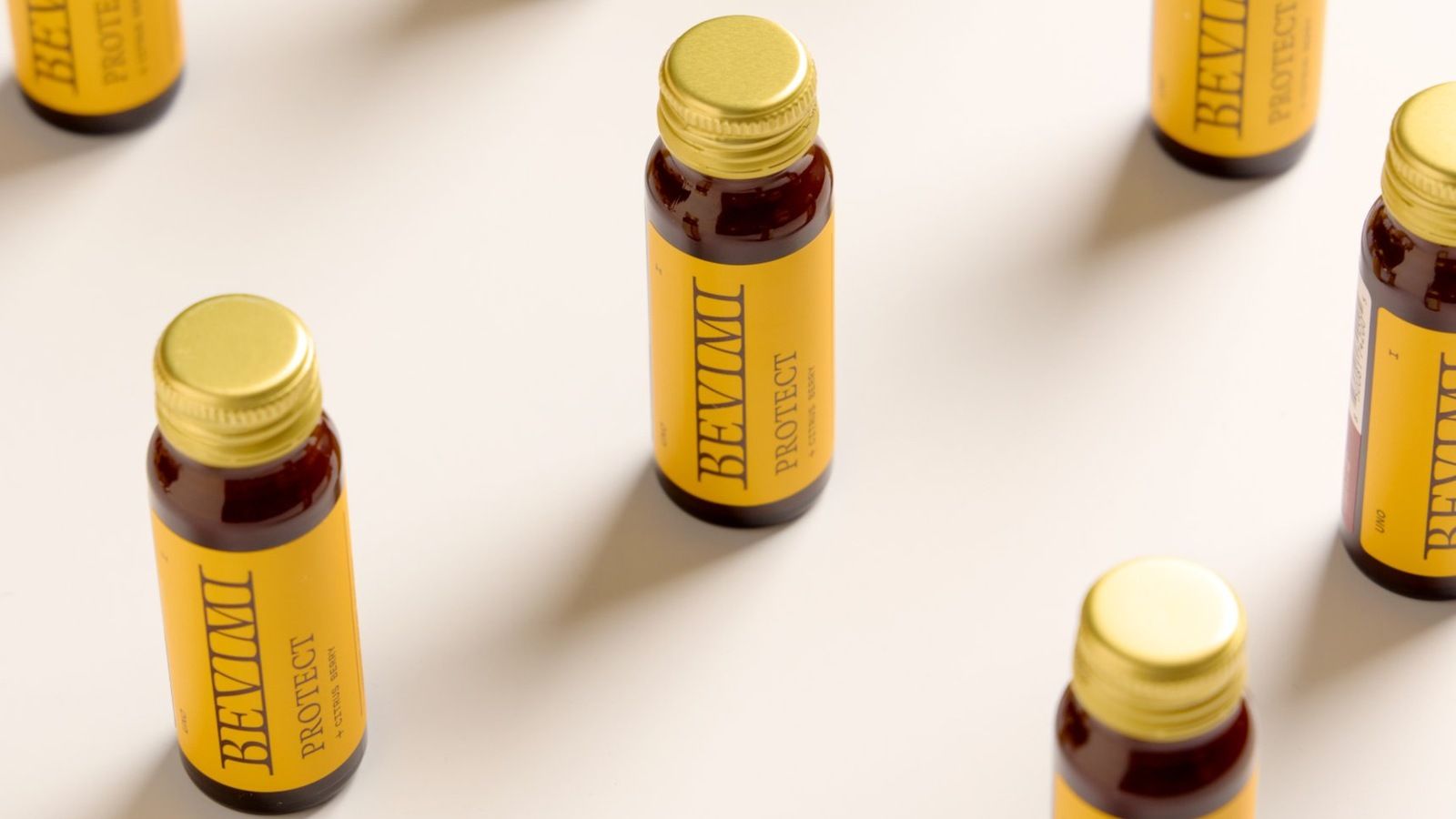
Uno Protect, from Bevimi, puts all four jobs into one 1.7 fl oz (50 mL) bottle a day. It holds 10 researched ingredients, at doses informed by published studies. Here's how the label lines up with the city:
- Defend brings together vitamin D3 (75 mcg, or 3,000 IU), quercetin (250 mg) and green tea extract (333 mg). Supports your body's natural immune defenses.*
- Calm pairs turmeric extract (250 mg) with blueberry extract (100 mg). Supports a healthy inflammatory response.*
- Rebuild draws on ROMEGA® herring roe, which supplies 871 mg of omega-3s (600 mg DHA and 174 mg EPA), 580 mg of phospholipids and 77 mg of choline, plus vitamin K2 as MK-4 (100 mcg). Supplies building blocks for healthy brain-cell membranes.*
- Recharge combines BOTALYS® HRG80® Korean red ginseng (200 mg), Zynamite S® mango leaf extract (100 mg) and 62 mg of magnesium from 770 mg of ATA Mg® (magnesium acetyl-taurinate). Supports mental energy and resilience to everyday stress.*
Omega-3s in the phospholipid form found in fish roe. The 62 mg of magnesium is 15% of the Daily Value, so food still carries most of that job.
You drink one bottle a day after a meal such as breakfast. It tastes best chilled, though it doesn't need refrigeration, and it has a citrus berry flavor with a lightly bitter finish. One bottle replaces a handful of capsules and softgels.
Bevimi is also studying Uno Protect directly. ARPA-H, a U.S. government health research agency, selected Bevimi for up to $2 million in funding for a research program called PS36-PRISMM. It includes a 24-week, randomized, double-blind, placebo-controlled study of 150 U.S. adults ages 45 to 70 who notice changes in their memory or thinking, with the analysis run by an independent research group.
For a full introduction to the bottle, read What is Uno Protect?
*These statements have not been evaluated by the Food and Drug Administration. This product is not intended to diagnose, treat, cure, or prevent any disease.
Frequently Asked Questions
How do brain supplements work?
They supply nutrients your brain and immune system already use for daily upkeep. A well-built formula covers four jobs: immune defenses (Defend), a healthy inflammatory response (Calm), building blocks for brain-cell membranes (Rebuild), and mental energy and resilience to everyday stress (Recharge).
What are the four jobs of a brain formula?
Defend, Calm, Rebuild and Recharge. Picture them as a city's security service, fire brigade, maintenance crew and power grid, each with its own set of nutrients and its own daily habits.
Can food cover all four jobs?
Food can do a lot of the work. Fatty fish supplies EPA and DHA for Calm and Rebuild, eggs supply choline, leafy greens, beans and nuts supply magnesium, and colorful plants supply polyphenols. Vitamin D is the hardest to get from food, since few foods contain much of it.
Is Uno Protect being studied as a whole formula?
Yes. ARPA-H, a U.S. government health research agency, selected Bevimi for up to $2 million in funding for PS36-PRISMM, a research program that includes a 24-week, randomized, double-blind, placebo-controlled study of Uno Protect in 150 U.S. adults ages 45 to 70.

About the author
Joel Totoro, RD
Joel Totoro, RD, is the Vice President of Nutrition at Bevimi and a registered dietitian and pioneer in sports nutrition and human performance. Totoro brings more than 20 years of experience helping elite athletes and high performers optimize their health, performance, and recovery through evidence-based nutrition.
Clinical References
- Serhan CN. Pro-resolving lipid mediators are leads for resolution physiology. Nature. 2014;510(7503):92-101. doi:10.1038/nature13479
- NIH Office of Dietary Supplements. Vitamin D: Fact Sheet for Health Professionals. ods.od.nih.gov
- Herrick KA, Storandt RJ, Afful J, et al. Vitamin D status in the United States, 2011–2014. Am J Clin Nutr. 2019;110(1):150-157. doi:10.1093/ajcn/nqz037
- Uwitonze AM, Razzaque MS. Role of magnesium in vitamin D activation and function. J Am Osteopath Assoc. 2018;118(3):181-189. doi:10.7556/jaoa.2018.037
- Dai Q, Zhu X, Manson JE, et al. Magnesium status and supplementation influence vitamin D status and metabolism: results from a randomized trial. Am J Clin Nutr. 2018;108(6):1249-1258. doi:10.1093/ajcn/nqy274
- Chang CY, Ke DS, Chen JY. Essential fatty acids and human brain. Acta Neurol Taiwan. 2009;18(4):231-241.
- Nguyen LN, Ma D, Shui G, et al. Mfsd2a is a transporter for the essential omega-3 fatty acid docosahexaenoic acid. Nature. 2014;509(7501):503-506. doi:10.1038/nature13241
- Dormal V, Jonniaux L, Buchet M, et al. Effect of hydroponically grown red Panax ginseng on perceived stress level, emotional processing, and cognitive functions in moderately stressed adults: a randomized, double-blind, placebo-controlled study. Nutrients. 2025;17(6):955. doi:10.3390/nu17060955
- Castellote-Caballero Y, Beltrán-Arranz A, Aibar-Almazán A, et al. Acute supplementation of soluble mango leaf extract (Zynamite® S) improves mental performance and mood: a randomized, double-blind, placebo-controlled crossover study. Pharmaceuticals. 2025;18(4):571. doi:10.3390/ph18040571